
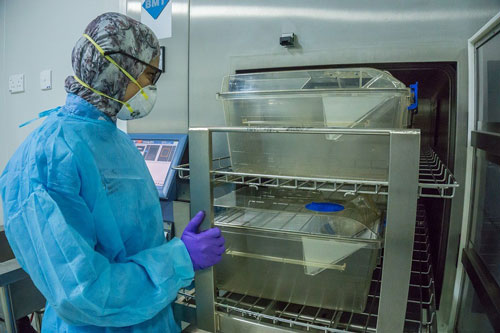
 What is an Autoclave?
In many industrial and commercial environments, there is a growing need for highly specialised equipment that can safely manage high temperatures and pressure. When considering these demanding applications, one of the most effective solutions is understanding what is an autoclave and how it supports controlled, high-quality manufacturing processes while protecting operators from risk.
An autoclave is often an overlooked but highly versatile piece of equipment used across a wide range of industries. When exploring what is an autoclave, it becomes clear that these systems are essential for achieving reliable sterilisation, controlled processing, and consistent results in pressure- and temperature-dependent applications.
Found in factories, laboratories, and production facilities across South Africa, autoclaves play a critical role in ensuring safety, precision, and efficiency in industrial operations. To better understand what is an autoclave and why it is so widely used, it is important to explore its applications, benefits, and role in modern industrial processes.
What are They Exactly?
Autoclaves (also called retort by the food industry), are essentially pressurised chambers that allow the user to control levels of pressure and heat within the chamber. They are used widely across various industries, and even in homes, where they come in the form of stovetop autoclaves otherwise known as pressure cookers. They are typically used to sterilise equipment, especially in the medical field, but also have a range of other applications and uses.
Use in Medicine
As mentioned above, autoclaves are commonly used to sterilise medical equipment, but they serve the medical field in a number of ways as well. They are often used in the process of creating prosthetics and are also ideal for sterilising medical waste. Because of this, they are important for medicine in poorer countries where equipment such as needles may need to be used more than once instead of discarded once they have performed their function.
For Research
Where research is concerned, producing accurate data relies on the researcher’s ability to control the testing environment, particularly with regards to pressure, air contamination and temperature. Often, control environments need to be kept separate from ambient ones; and due to the high-pressure operations of autoclaves, they are often one of the most effective and affordable ways of doing this.
Specific Production
Autoclaves have a wide range of production applications as well. They are commonly used by the rubber industry for vulcanisation, which adds sulphur or other curing elements to convert rubber into more durable materials.
Contact Steam Generation to Find Out More
If you would like more information on how you can source high quality autoclaves for your specific processes, contact a representative from Steam Generation today, or visit our website for further details on our Retorts and boilers. We are waiting for your call.


